Underwriting efficiency: how to build the automation case from the minutes spent on each file


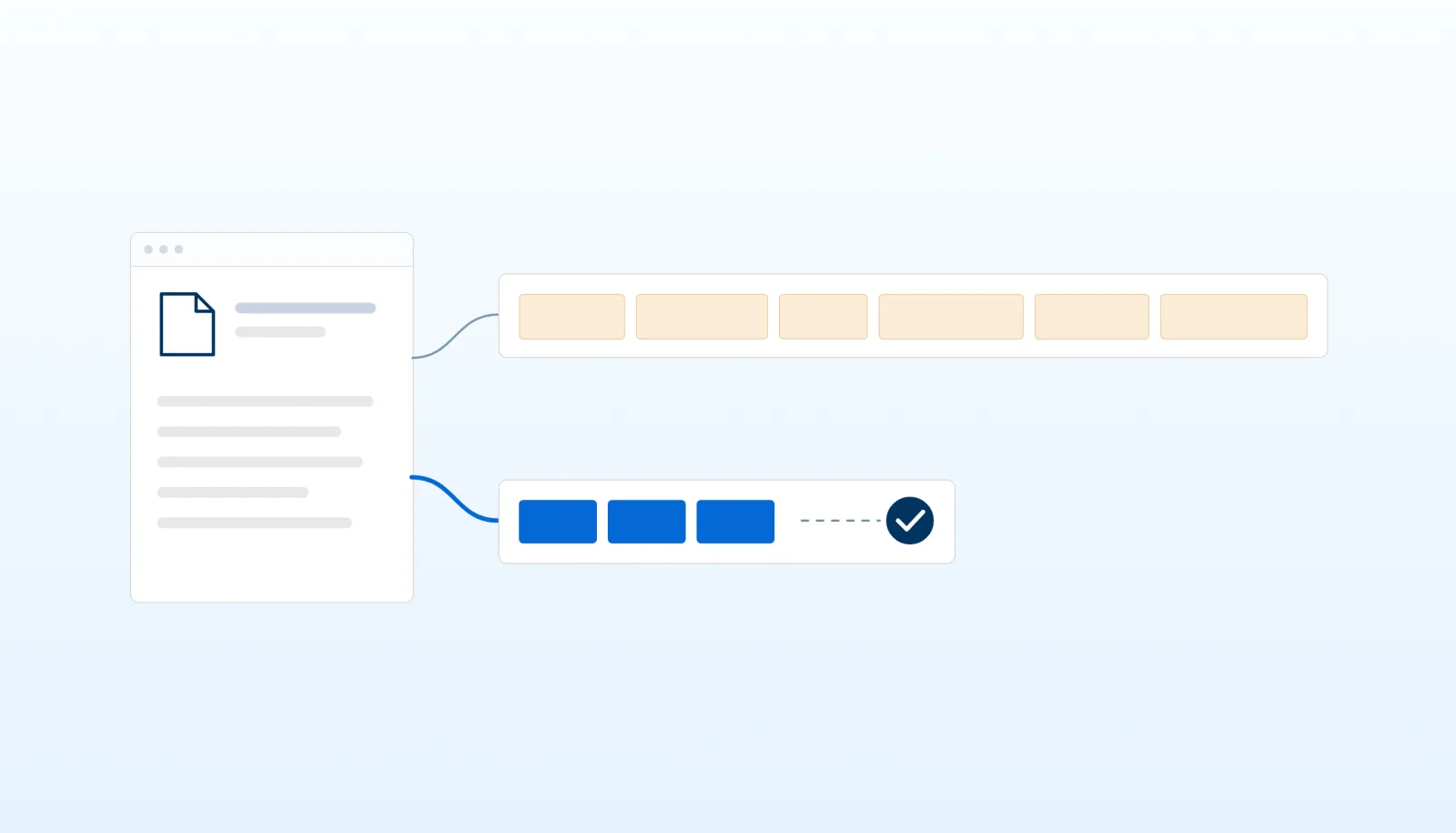

- Underwriting efficiency is easier to prove in minutes per file and passes per submission than against an underwriter's salary, since underwriters stay and the preparation work is what shrinks.
- At the May 2025 median wage of $39.12 an hour (U.S. Bureau of Labor Statistics), one 15-minute check costs close to $10 of underwriter time before benefits.
- Finance often approves a smaller existing cost faster than a new expense, so the case should show which preparation work it takes off the books.
- Rule-based checks such as completeness, duplicates and renewal comparisons can run on their own, while price, terms and judgment calls stay with underwriters.
Underwriting efficiency is easiest to prove, and easiest to get funded, when you count the minutes your team spends on each file and the number of times the same file is handled before a decision, since a salary line tells your finance lead almost nothing about which work would actually go away. Many automation business cases we see start from the wrong end: they take an underwriter's annual pay, compare it with a software quote and ask whether the tool costs less than a person. That comparison stalls the conversation, because both sides already know the underwriters are staying and the tool is there to change how their day is spent. The more useful question is how many minutes your team spends on each submission before anyone makes a decision, how many passes the same file takes (each time it is opened, keyed or checked), and what those minutes cost at a loaded hourly rate, meaning pay plus benefits and overhead. Once those numbers are on the page, the case for automating the preparation work either holds up or falls short, and in many teams the repeated handling of the same file is enough to carry it.
Why does comparing automation with an underwriter's salary give the wrong answer?
A salary comparison treats the underwriting team as one fixed cost, while the work it absorbs moves with every submission, so the two numbers never line up in a way finance can sign. The better lens, and one our team returns to in many cost conversations, is to ask how many minutes of a person's time each piece of work takes today, and how much those minutes vary from one file to the next, since a clean renewal and a 40-page new business submission with three loss runs are different jobs even when they land in the same inbox. The head of underwriting at one workers' comp program administrator put the buyer's side of this plainly: no paying dollar for dollar against headcount, though "two for one" savings could be worth a conversation, which we read as the saving needing to be about twice what the tool costs. That is a fair bar, and it is a bar you can only clear by counting work in small units. According to the U.S. Bureau of Labor Statistics Occupational Outlook Handbook, the median wage for insurance underwriters was $81,370 a year in May 2025, or $39.12 an hour, before benefits and overhead, which means a single 15-minute check costs close to $10 of an underwriter's time at the median, and more once benefits are added.
How do you put a cost on each pass through a submission?
The quickest way to cost the work is to follow one file and write down every time someone opens it, keys something from it or checks it against something else, because the passes add up faster than most teams expect. An operations lead at one wholesale broker told us that a single submission can go through intake 10 to 20 times across the industry, at about $5 to $15 of repeated work each time, and that the firm itself may repeat it about four times internally. A carrier or MGA sees the same pattern on a smaller scale whenever intake, an assistant and the underwriter each open and key the same file. The program administrator above has six or seven line underwriters reviewing every renewal, automatic policy rebuild and audit-driven change by hand, at 15 to 30 minutes each. Neither number is an industry benchmark, and you should swap both for your own, though they show the kind of detail a finance lead can use. The table below is the worksheet we suggest, with an example from those calls in each row.
| What to count | Where to find it | Example from a buyer call |
|---|---|---|
| Minutes per pass | Time one week of files from inbox to underwriter-ready | 15 to 30 minutes per renewal check (workers' comp program administrator) |
| Passes per file | Count every open, rekey and recheck in your own systems | About four internal passes per submission (wholesale broker) |
| Share of files that need a person | Ask underwriters which files they would wave through if the data were checked | About 8 in 10 renewals would need no underwriter review, in one program head's estimate |
| Cost per hour | Payroll plus benefits, or a public wage as a floor | $39.12 median hourly wage, insurance underwriters, May 2025 (BLS) |
Multiply minutes per pass by passes per file and by monthly volume, divide by 60 to get hours, apply the hourly cost and you have a monthly figure for preparation work already on your books, whether it sits with your own underwriters, with assistants or with an outsourced team. As an illustration only, a team that spends 20 minutes on each pass, makes four passes on each file and receives 500 submissions a month is carrying about 667 hours of preparation work, which comes to roughly $26,000 a month at the $39.12 median wage before benefits. Applying the share of files your underwriters would wave through then shows how much of that figure automation can realistically take off the books.
Also read: How is submission intake automation priced?
Why does finance say yes to a saving faster than to a new expense?
Finance teams often approve a reduction in a cost they can already see faster than a new line in the budget, so the business case has to show which existing spend gets smaller before it says anything about what the new tool costs. The wholesale operations lead we spoke with described this exactly: the finance team there says yes quickly to an immediate saving and no to a new expense, so any spend on submission data had to be framed as money taken out of work already in the budget. That framing also matches what many carriers and MGAs are trying to do, which is lower the expense side of the combined ratio while keeping room to grow. Our view, shaped by many of these calls, is that the fit depends on how much a program wants to grow, since a team planning to write more submissions next year gets the benefit twice: the preparation work it pays for today shrinks, and the extra volume arrives without a matching rise in hours. A team with flat volume gets the first benefit only, which is still worth having when it is sized carefully against the two-for-one bar.
Which checks still need an underwriter, and which can run on their own?
The work that can run on its own is the checking that follows clear rules from your own guidelines, while price, terms and anything that depends on fresh judgment should stay with your underwriters, since that is where their time earns its keep. The same program head estimated that about 8 in 10 of that workers' comp program's renewals would need no underwriter review once the data was checked, and that a good share of automatic rebuilds could simply trigger a notice to the insured. The same person was just as clear that the negotiation deep dives depend on fresh claims and safety reports, which is why those files stay with the underwriting team. Checks that usually fall into the first group include:
- Completeness against your mandatory fields, with one consolidated request to the broker for anything missing
- Duplicate and resubmitted accounts across brokers, matched on insured name, FEIN and other details
- Year-over-year renewal comparisons on exposure, with changes flagged for review
- Missing loss-run years, summary-versus-detail mismatches and insured-name conflicts
Trust in those checks is built over time, and the pattern our team expects is that a buyer starts with every output reviewed, then reaches a point where most of the routine work is plainly correct and the routine files no longer need a look. That progression is what autonomy in underwriting looks like in practice: the routine preparation runs from submission to a file ready for a decision, anything a check flags goes to a person, and the underwriter keeps the judgment on price, terms and edge cases.
Also read: Underwriter capacity in commercial P&C: how to grow GWP without growing headcount in a soft 2026 market
What should an underwriting efficiency case include before it goes to finance?
A case that finance can review without sending it back for more numbers is built from your own volumes and your own minutes, and it asks the vendor to commit to the outcome in writing, since a projected saving with no contract behind it is the first thing a finance lead will discount. When our team prepares one with a buyer, the first thing we ask for is expected monthly or annual submission volume for each product, because the return differs sharply between a high-volume small commercial book and a low-volume specialty program. A practical order of work looks like this:
- Time one week of files from inbox to underwriter-ready, and record minutes per pass for each step.
- Count passes per file, including rekeying into the rater and any second system.
- Split the checks into rule-based ones and judgment calls, using your underwriters' own view of which files they would wave through.
- Cost the rule-based minutes at a loaded hourly rate, by product and by month, and set the saving against the two-for-one bar.
- Ask for the accuracy level and the return in the contract, and agree how both will be measured on your own submissions.
How does the AI Underwriting OS handle the preparation work?
Pibit AI is the AI Underwriting OS for commercial, specialty and E&S insurance, and its AI agents run underwriting from submission to quote, so your underwriters spend their time on decisions and broker relationships. In practice that means the preparation work in the worksheet above runs through Intake & clearance, which turns emailed submissions into cleaned, completed and cleared files inside your existing systems, and Extraction & research, which reads ACORDs, loss runs and supplementals and traces every field back to its source page. You can start with the one module where the minutes are heaviest, a module goes live in a few weeks with no implementation fee, and outcomes are guaranteed in the contract: 99.9% workflow accuracy with our human-in-the-loop, plus the ROI we commit to. Our headline numbers, such as 2x underwriter throughput, show what is possible, and the real test is still your own files. To see the numbers on your own submissions, request a demo.
Frequently Asked Questions

Measure the minutes your team spends on each pass through a submission before anyone makes a decision and the number of passes each file takes (every time it is opened, keyed or rechecked). Minutes per pass times passes per file times monthly volume, divided by 60 and multiplied by a loaded hourly cost, gives a monthly figure for preparation work; the share of files that truly need an underwriter's judgment then shows how much of that figure automation can realistically take off.
There is no single number, though some buyers set a clear bar: one workers' comp program head told us dollar-for-dollar savings would not be enough, while two-for-one could be worth a conversation. The case is stronger when it is built from your own volumes by product and when the vendor commits to accuracy and return in the contract.
Checks that follow clear rules from your guidelines can usually run on their own, such as completeness against mandatory fields, duplicate accounts across brokers, year-over-year renewal comparisons and missing loss-run years. Price, terms and calls that depend on fresh claims or safety information stay with underwriters, who keep the judgment on those files.
Editorial voice · Underwriting desk

By submitting this form, you consent to Pibit.AI Inc. contacting you and processing your data in accordance with our Privacy Policy.
Featured blogs
Ready to optimize